Navigating Legal Risks in Warehousing
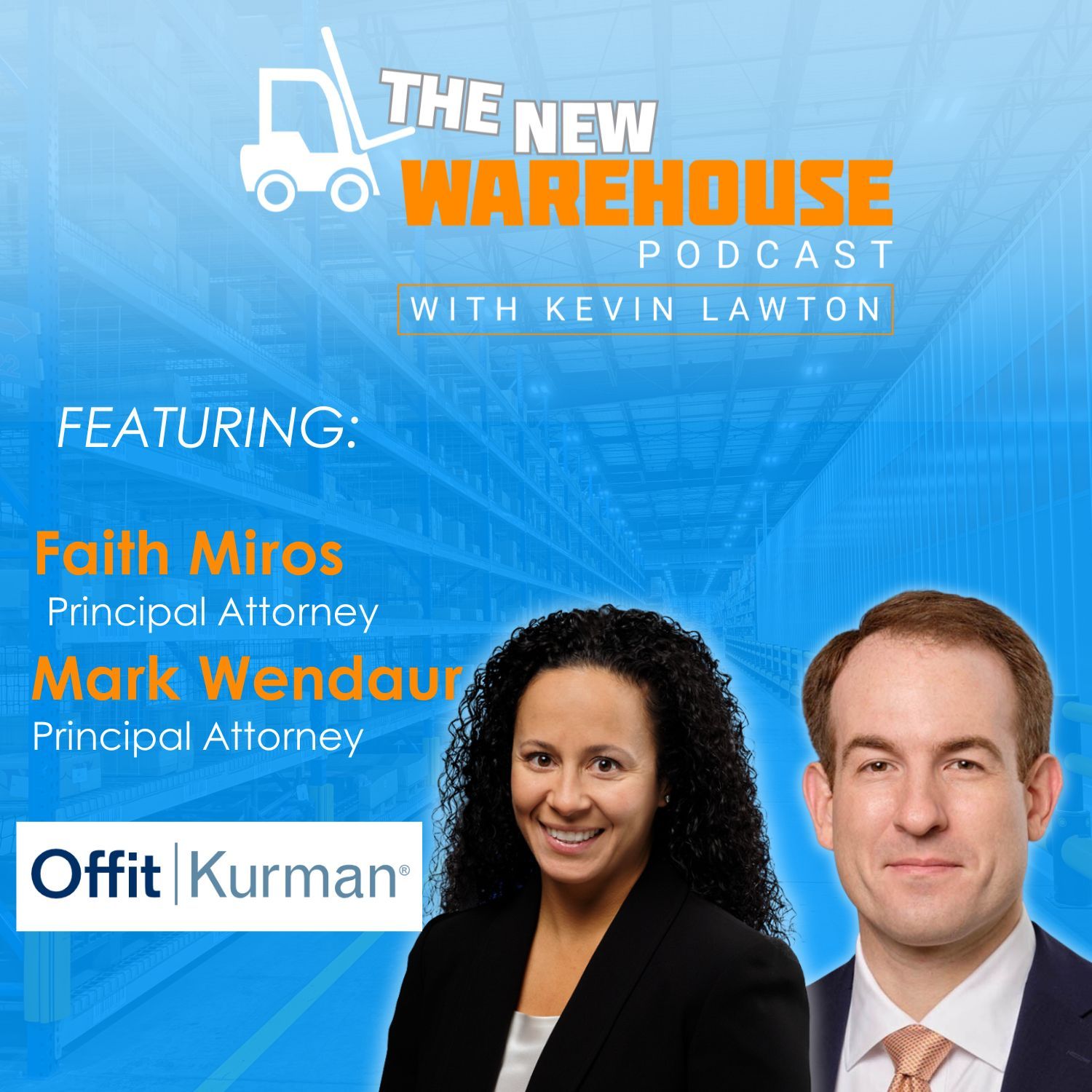
Kevin chats with attorneys Faith Miros and Mark Wendaur of Offit Kurman to break down the legal realities shaping warehouse and logistics operations today. Offit Kurman is a national full-service law firm with more than 300 attorneys advising business owners across the full lifecycle of their organizations. In the warehouse sector, Faith focuses on real estate, zoning, environmental compliance, and industrial leasing. Meanwhile, Mark concentrates on transactional work, contracts, financing, and governance.
Together, they unpack how operators can protect themselves from legal risks in warehousing. Their insights reveal how legal strategy increasingly influences location decisions, customer relationships, and the long-term stability of warehousing operations.
Understanding the Legal Pressures Behind Industrial Real Estate
The conversation begins with how industrial real estate has shifted since the COVID-era building boom. Many operators are now facing excess space, delayed projects, environmental concerns, or zoning hurdles.
Faith notes that zoning is rarely static, and federal incentives are reshaping what industrial land can become. She points out that, for example, parts of Manhattan are already considering converting industrial buildings to multifamily housing. As she explains, “there’s a constant adjustment in the market, and I think we’re in that kind of an adjustment phase right now. Things are recalibrating after the race to build more warehouse space during COVID.”
Because many tenants are now sitting on leverage, negotiations look different than they did just a few years ago. Many operators are securing early termination clauses, rent abatements, or reduced Common Area Maintenance (CAM) charges. Faith sees this trend broadening, emphasizing that “the smart business owner… is definitely revisiting the terms of their leases.” In a softening market, understanding these pressures allows operators to negotiate from a position of strength rather than urgency.
Contract Failures, Non-Payment, and Risk Exposure Inside the Warehouse
While real estate challenges shape the building’s exterior, contractual risks shape what happens inside it. Mark explains that the entire warehouse lifecycle—entity formation, financing, lease structure, customer onboarding, and day-to-day operations—is governed by contracts. When markets tighten, the weaknesses in those agreements become apparent quickly.
Mark describes a recent example involving PPE inventory that had collapsed in value. This led to unpaid warehouse fees, lien questions, ownership claims, and uncertainty about disposal. As he notes, “everyone’s looking at their agreements now… can I assert a lien on this?… what exactly can you do with it now that it’s sitting in your warehouse, taking up space?”
Operators also face downstream delays due to tariffs, import bottlenecks, or customers suddenly stopping payment, while inventory continues to age. The risk compounds when service agreements lock warehouse teams into continued operations even after a customer is delinquent. Mark highlights one case: “They could not stop providing services until they provided 30 days’ notice… even though you know that they haven’t been paying their bills.” Understanding these risks early—before signing agreements—can dramatically change outcomes when markets tighten.
AI, Cybersecurity, and the New Legal Risks in Warehousing
As warehouses adopt automation, robotics, and AI-driven tools, the legal implications multiply. Faith sees this starting even before a company signs a lease: AI-powered site-selection tools are increasingly used to identify potential locations, assess rental rates, and compare markets. She emphasizes that “AI tools are being used significantly to analyze deals… but you have to know where to go to find the right information and ensure what’s being fed to you is accurate.”
Once AI becomes part of active operations—whether in WMS platforms, contract review tools, or robotics—confidentiality, indemnification, and data-security provisions must evolve. Mark points to rising legal risks in warehousing tied to ransomware and unsecured AI systems. He references a real case involving a logistics provider whose cyberattack froze outbound shipments for weeks: “Because of that ransomware attack, they suffered huge losses… nothing was leaving the warehouse.”
Both attorneys agree that AI is a powerful enhancer but not a replacement for experienced review. As Mark shares from recent industry guidance, “AI will not replace lawyers. Lawyers will be replaced by lawyers that use AI.” For warehouse leaders, the takeaway is clear: AI can be a strategic advantage only when paired with strong legal safeguards.
Key Takeaways on Navigating Legal Risks in Warehousing
- Zoning and federal incentives are reshaping where and how warehouses operate.
- Tenants currently have leverage to negotiate rent abatements, early terminations, and better CAM structures.
- Contract terms—not assumptions—determine what happens during non-payment, delays, or stalled inventory.
- Operators must carefully review lien rights, termination clauses, indemnification, and payment triggers.
- AI adoption requires updated confidentiality and indemnity provisions to prevent the exposure of sensitive data.
- Cyberattacks remain a major operational and financial threat in logistics.
- Data-driven analysis can help identify opportunities to renegotiate leases and customer contracts.
Listen to the episode below and leave your thoughts in the comments.
Guest Information
For more information on Offit Kurman, click here.
To connect with Faith Miros on LinkedIn, click here.
To connect with Mark Wendaur on LinkedIn, click here.
For more information about compliance and legal risks in warehousing, check out the podcasts below.
639: Expert Supply Chain Advice from “Legend” Rick McDonald
Supply Chain Point: Solving Logistics Challenges with Nish George
Warehouse Trends September 2025: Robotics, Fulfillment, and WERC Insights