Smart Warehouse Technologies Driving Real-Time Operations
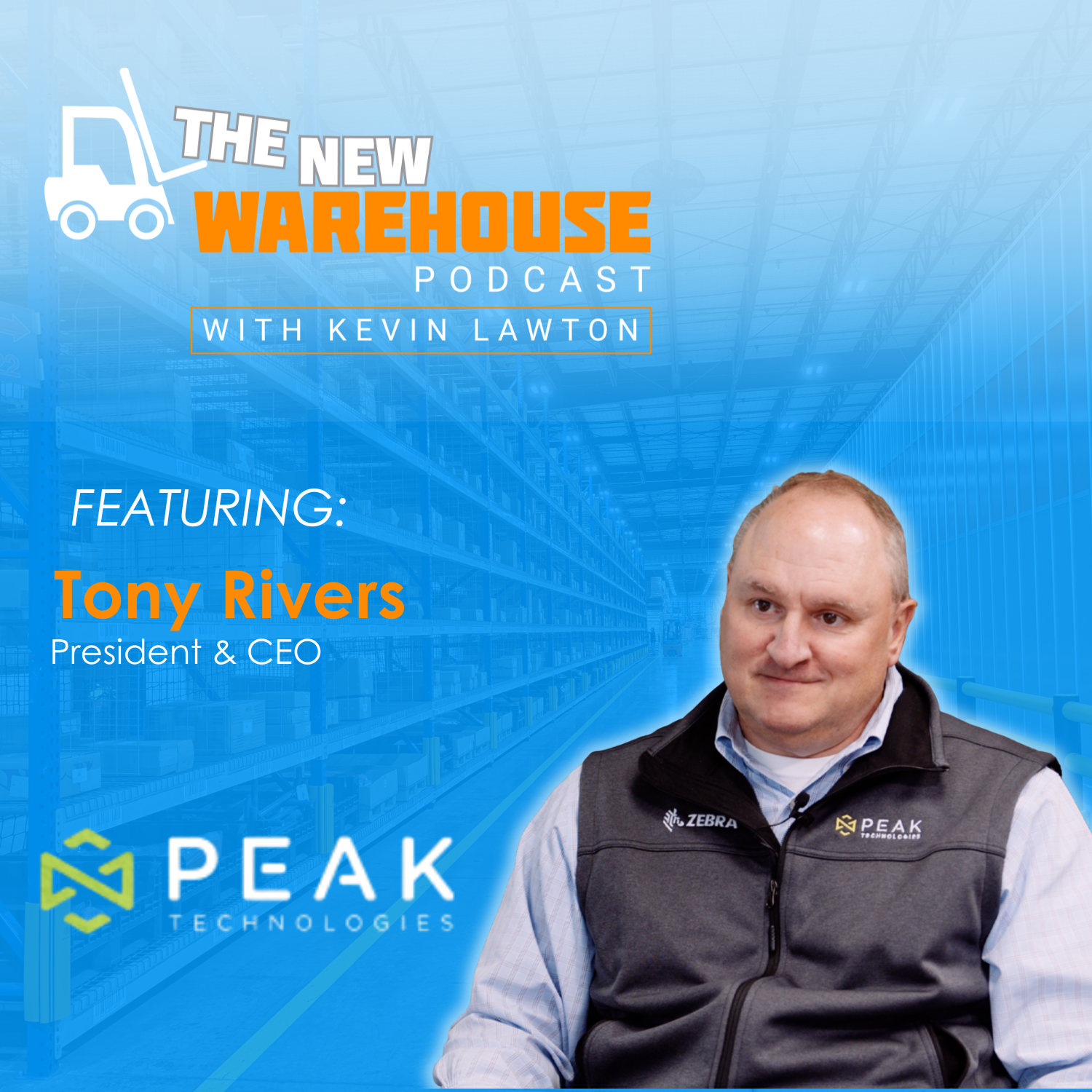
Welcome to this episode of The New Warehouse Podcast, recorded on-site at Peak Technologies’ Executive Briefing Center in Littleton, Massachusetts. Kevin chats with Tony Rivers, President and CEO of Peak Technologies, about how smart warehouse technologies are reshaping modern operations. Peak Technologies is a global solutions provider supporting supply chain, transportation, and logistics operations with end-to-end technology services.
In this conversation, Rivers reflects on how warehouse technology has evolved over the past two decades. He shares why speed, labor constraints, and customer expectations are forcing a shift toward smarter systems. Rivers also explains how Peak helps customers navigate complexity by testing, validating, and integrating technologies that solve operational problems.
Smart Warehouse Technologies and the Pressure to Move Faster
Warehouse operations today are under pressure from every direction. Customer expectations have shifted dramatically, and technology has had to keep pace. As Rivers explains, “Amazon has created the world of same-day expectations, and so that’s put a lot of pressure on the supply chain to be able to produce product quickly, get the right product and right places at the right times.” Legacy systems could never handle this level of speed or visibility.
Labor challenges have only intensified the problem. Rivers notes that “you couple that with the labor situation out in the market and trying to find enough employees to do the work, and it puts a heavy strain on the supply chain.” In response, Peak Technologies focuses on what Rivers calls smart warehouse technologies. These include RFID, robotics, machine vision, AI, and analytics, all designed to improve productivity and reduce friction. The goal is not automation for its own sake, but enabling employees to make better decisions faster, using real-time data at the point of activity.
From Barcodes to RFID and Machine Vision
While barcode scanning remains foundational, warehouses are no longer limited to one method of data capture. Rivers emphasizes that “it’s all about real-time information and information at the point of activity.” RFID has matured significantly, especially as tag costs have dropped and data processing has improved. According to Rivers, “RFID allows you to get a read on a product without doing a physical scan, and that really differentiates how you can track movement through specific points without a human interaction.”
Machine vision adds another layer of insight. Rivers describes it simply, saying “machine vision is a lot like a set of eyes that’s examining things, capturing images, and then allowing us to make decisions based on what we see.” These systems can validate shipments, detect damage, confirm pallet contents, and even provide proof of condition to dispute chargebacks. Importantly, Rivers is clear that this is not an either-or decision. “Barcoding will never go away,” he says, but the future lies in combining technologies to do more with less.
Turning Data Capture Into Real-Time Decisions
Capturing data is only valuable if it drives action. Peak Technologies bridges that gap with analytics and modeling. Rivers explains how Peak processes images, RFID reads, and sensor data to trigger real-time business decisions. “We use the real-time capture of the information combined with the analytics and the models to allow you to make real-time business decisions.”
One example involves compliance with lithium-ion batteries. Vision systems identify tagged products, and analytics ensure trucks stay within regulatory limits. If they exceed thresholds, alerts are triggered immediately. These same principles apply to pallet wrapping, dock door scanning, and forklift operations. Vision systems can validate pallet contents, detect damage, and confirm correct putaway without slowing workers down. Rivers sums up the opportunity clearly: “We have the ability now to combine all these technologies and solve some really difficult business challenges that 20 years ago we couldn’t have solved.” For warehouses struggling with errors, labor shortages, and rising costs, that shift is transformational.
Key Takeaways
- Smart warehouse technologies combine RFID, machine vision, analytics, and robotics to enable real-time visibility.
- Same-day delivery expectations have exposed the limits of legacy warehouse systems.
- RFID reduces manual scanning by capturing product movement without human interaction.
- Machine vision provides validation, proof of condition, and error detection at critical touchpoints.
- Analytics turn captured data into immediate, actionable business decisions.
- Hybrid approaches combining barcodes with newer technologies deliver the best results.
Listen to the episode below and leave your thoughts in the comments.
Guest Information
For more information on Peak Technologies, click here.
To connect with Tony Rivers on LinkedIn, click here.
For more information about smart warehouse technologies, check out the podcasts below.
Live from WERC: The Future of Warehouse Distribution, Technology, and Workforce Innovation
638: Automating Brownfield Warehouses With Cartesian Kinetics
621: Harnessing Technology to Advance Cold Storage Operations at Lineage

Beyond the Barcode: How Peak Technologies Powers the Connected Store » The New Warehouse
[…] Hear more on how Peak Technologies is expanding data capture capabilities in this recent podcast. […]