Warehouse Automation Planning: What It Really Takes to Prepare for Peak
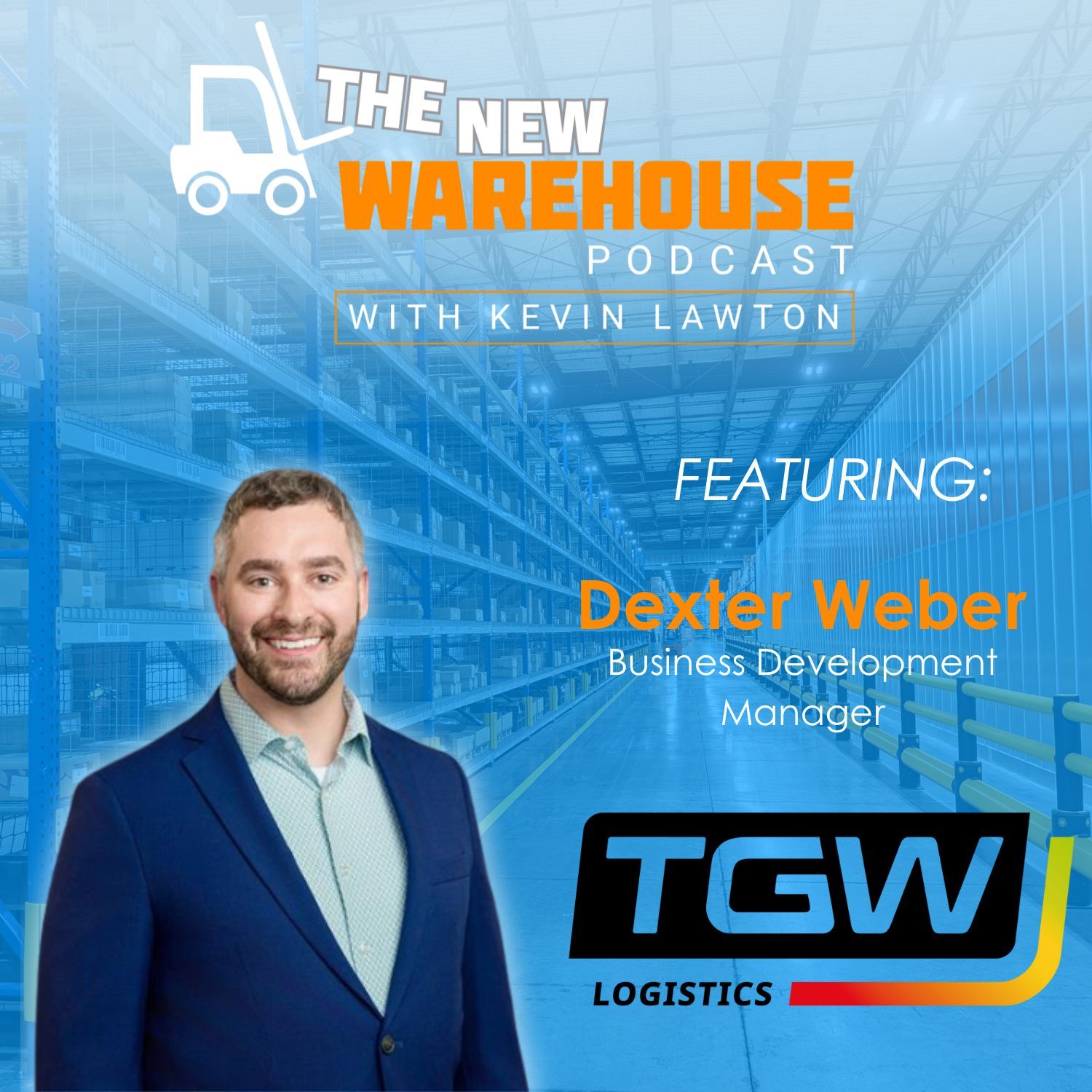
In this episode of The New Warehouse Podcast, Kevin Lawton sits down with Dexter Weber, Business Development Manager of Automation Integration Solutions at TGW. With peak-season pressures fresh in mind and 2026 already on the horizon, the conversation explores what it takes for proper warehouse automation planning. The discussion offers a candid look at what’s feasible, what’s not, and why the warehouse automation planning phase is often the most critical part of any automation journey.
The Real Challenge Behind Peak Season Performance
Peak-season success often masks the real strain on warehouse operations. While strong order volumes look good on paper, the pressure behind the scenes tells a different story. According to Weber, labor remains a primary source of stress during peak periods. “Training is probably one of the biggest impacts. You hear of people hiring maybe a thousand people knowing they need 500 and they’re just hoping to get people trained a couple months ahead of peak season.”
That level of turnover creates enormous complexity. Training alone becomes a costly exercise, both financially and operationally. As Weber explains, “When you think about how complex that is, that’s a lot of people involved, a lot of effort involved, and a lot of costs going into these trainings.”
Beyond training, the physical demands of peak season also create friction. Receiving, picking, and packing operations face the heaviest loads, especially in high-volume facilities. Weber notes that many warehouses are now viewing automation not as a luxury but as a way to stabilize operations during periods of intense demand. “You don’t want to spend a bunch of money on extra equipment that you only need for ten or fourteen days out of the year.”
That reality is driving more operators to think strategically about flexibility and scalability rather than to rely on short-term fixes.
Why Automation Starts with Planning, Not Technology
One of the biggest misconceptions about automation is that it starts with equipment. In reality, Weber stresses that the work begins much earlier. As he explains, “what we like to do is start that journey with them in those early stages and really take a holistic view of the business.” That means looking beyond a single bottleneck or facility and understanding how everything connects. “It’s not just, ‘Hey, we identified these gaps in this specific warehouse,’ but we wanna understand what your whole distribution network looks like?” That broader perspective helps determine whether automation is even the right move and, if so, what kind of solution makes sense long term.
Warehouse automation planning also depends heavily on the type of facility involved. Greenfield projects allow more freedom, but often come with longer timelines and higher upfront investment. Brownfield environments, on the other hand, introduce a different set of constraints. As Weber puts it, “you’re designing around already existing operations,” which means balancing progress with continuity. In those situations, “the goal is how can I minimize the impact of working around those operations,” while still moving forward.
Choosing Between Mobile, Fixed, or Blended Automation
One of the most common questions operators face is which automation path makes the most sense for their operation. As Weber explains, the answer depends on a mix of throughput, facility constraints, and long-term flexibility. In recent years, mobile automation has become a more feasible entry point for many facilities. “I would say the mobile category is more of a growing category for us,” he notes, pointing to its adaptability and ease of adoption. A big reason for that growth is accessibility. “Part of it’s because it has easier barriers to entry,” Weber says, adding that it is “a little bit more affordable and scalable and small increments.”
However, Weber is clear that mobile solutions are not always the best long-term answer. As volume increases, limitations begin to surface. “At a certain point, you’d have to use so many to get something done; at what point can you just accomplish the same with the conveyor?” he explains. Throughput, space utilization, and operational flow all begin to favor fixed automation as demand grows. In many cases, the most effective solution is a blend of both approaches. Mobile systems can provide flexibility, while fixed automation delivers warehouse efficiency at scale. That balance is why warehouse automation planning matters so much.
Key Takeaways on Warehouse Automation Planning
- Warehouse automation planning starts with understanding processes, not buying technology.
- Training and labor retention remain major drivers behind automation decisions.
- Mobile automation offers flexibility, but fixed systems deliver higher throughput at scale.
- Brownfield projects require careful phasing to avoid operational disruption.
- Warehouse automation planning timelines often extend months or even years before go-live.
- Financial modeling and ROI assumptions play a critical role in decision-making.
- Early planning is essential for hitting peak-season readiness targets.
Dexter’s 2026 Guidance for Warehouse Automation Planning
- Start now if 2026 is your target.
- Mobile automation is the most realistic option for near-term impact.
- Fixed automation requires longer timelines and earlier commitment.
- Brownfield projects add complexity and should be planned carefully.
- Avoid overbuilding just for peak.
- Planning matters more than technology.
Listen to the episode below and leave your thoughts in the comments.
Guest Information
For more information on TGW, click here.
To connect with Dex Weber on LinkedIn, click here.
For more information about warehouse automation planning, check out the podcasts below.
Warehouse Improvement Through Smarter Project Management
631: Customer-Centric Automation with Adrian Stoch of Hai Robotics