AI-Powered Warehouse Robots Redefining Order Packing
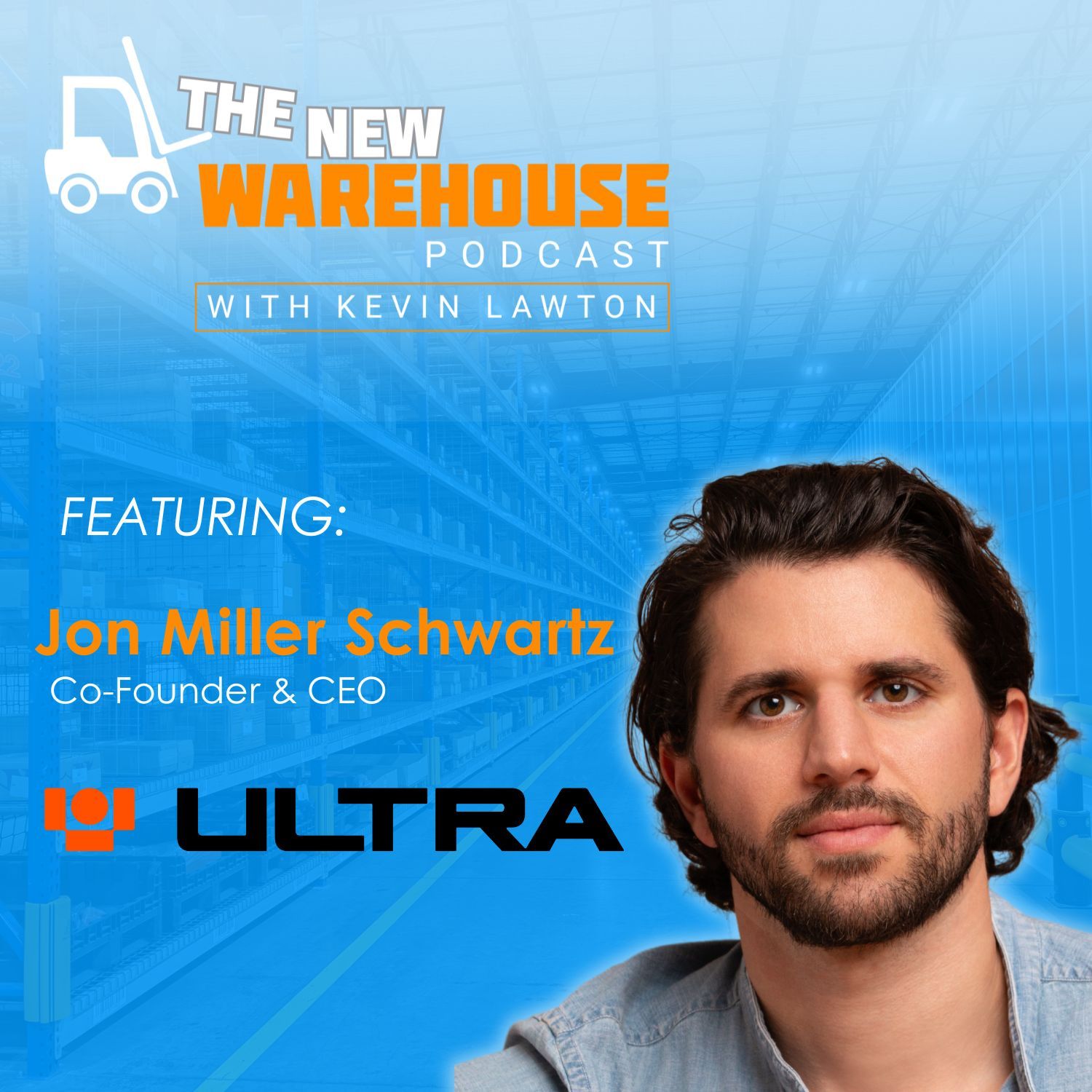
In this episode of The New Warehouse Podcast, Kevin chats with Jon Miller Schwartz, Co-Founder and CEO of Ultra, a Brooklyn-based robotics company focused on bringing AI-powered warehouse robots into operations. Ultra is tackling one of the most repetitive yet complex tasks in e-commerce fulfillment: order packing. Rather than building robots that rely on rigid programming, Ultra is applying modern AI models to enable greater flexibility, adaptability, and real-world deployment.
During the conversation, Jon explains why advances in AI have unlocked tasks once considered impossible for robots, why packaging was the right starting point, and how Ultra’s approach is reshaping throughput, predictability, and labor challenges in warehouses today. The discussion also explores ROI, workforce impact, and what the next generation of AI-powered warehouse robots can handle.
Why AI Changed the Robotics Equation
For years, warehouse robotics struggled with flexibility. Traditional systems worked only when conditions stayed perfectly consistent. Jon explains that shift clearly, noting that “what’s happening now is people are using essentially the same technology that powers ChatGPT, neural nets, to control robots.” This change allows robots to be trained with data instead of rigid rules, making them adaptable to new tasks and environments.
That leap has unlocked tasks once seen as unreachable. As Jon puts it, “we’re even seeing robots capable of doing things that were literally impossible just a few years ago.” Folding laundry became the symbolic breakthrough, proving dexterity could be learned through AI. Ultra applied that same capability to warehouse order packing, where variability is constant, and products change daily. The result is a robot that adapts instead of breaking when conditions shift.
Why Order Packing Was the Right First Move
Ultra’s focus on packing came from firsthand experience. Jon and his co-founders previously ran a manufacturing business with in-house fulfillment. They knew packing was labor-intensive and physically demanding. Jon describes the reality simply: “This is something that, you know, a hundred thousand people do as their job in the United States… and it requires a lot of dexterity.”
Packaging also presented the right technical profile. Pack stations are structured environments, yet every item can be unfamiliar. Jon explains that “you might be packing one of thousands of items, and maybe you’ve never seen this item before, and you’re packing it into a deformable material like a poly mailer.” AI made that complexity manageable. Today, Ultra’s robots pack poly bags and padded mailers, with box packing launching next. That scope covers most e-commerce orders.
Predictability, Throughput, and Real ROI
Speed often dominates debates about automation, but Jon reframes the conversation. He emphasizes consistency over bursts of performance, explaining that “the main advantage that we try to provide to our customers is predictability and consistency of throughput.” Ultra’s robots operate daily, with zero down days reported at customer sites.
From an ROI perspective, Ultra’s robots are offered as a service, priced between $2,500 and $3,000 per month. Jon shares that customers see “30 to 40% monthly savings for a single robot.” While robots may move slower than top human performers today, Jon stresses improvement is rapid. He points to recent AI model releases delivering “40 to, in some cases, a hundred percent improvement in throughput.” More importantly, robots work consistently across an entire shift, without breaks or distractions, leveling real-world output.
Key Takeaways on AI-Powered Warehouse Robots
- AI-powered warehouse robots now use neural networks instead of rigid programming.
- Tasks once considered impossible, such as flexible item handling, are now achievable.
- E-commerce is growing 7–8% annually, creating sustained demand for automation.
- Ultra robots deliver 30–40% monthly cost savings per robot.
- Throughput can exceed 1,000 orders per shift, depending on order complexity.
- Fleet learning allows robots to improve collectively over time.
- Installation requires 1–2 days with no floor bolts or construction.
Listen to the episode below and leave your thoughts in the comments.
Guest Information
For more information on Ultra, follow them on LinkedIn.
To connect with Jon Miller Schwartz on LinkedIn, click here.
Ultra Robotics Automation in Action
For more information about AI-powered warehouse robots, check out the podcasts below.
631: Customer-Centric Automation with Adrian Stoch of Hai Robotics
Live from WERC: Synkrato is Changing Warehousing from the Ground Up with AI
561: Maximizing Profits with Fewer Robots – The Breakthrough from Zebra Robotics in AMR Utilization